-
12. Curvature induced phase separation in lipid bilayers: A structural and compositional perspectiveProf. Marite Cardenas (Instituto Biofisika)10.10.24, 10:30Bio-interfacesInvited talk
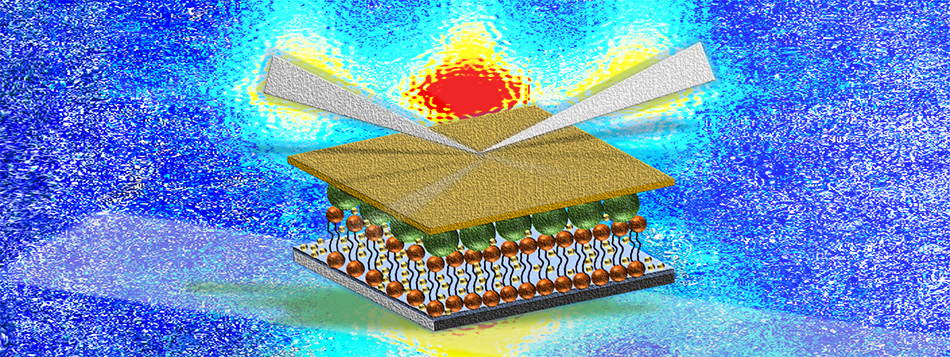
Curvature induced phase separation in lipid bilayers: A structural and compositional perspective
O. Kyzyma*1, F. Mehler2, A. Vorobiev2, N. Paracini3, M. Wolff2, M. Cárdenas1,4.1Instituto Biofisika (CSIC, UPV/EHU), Fundación Biofísica Bizkaia/Biofisika Bizkaia Fundazioa (FBB), 48940, Leioa, Spain
Go to contribution page
2Department of material physics, Uppsala University, 751 20 Uppsala, Sweden
3Institut... -
Giuseppe Vitiello (University of Naples Federico II)10.10.24, 11:00Bio-interfacesInvited talk
Biointerfaces describe the areas of making contact with biological environments, such cells, tissues, living organisms, bio(macro)molecules or organic/inorganic materials. Nano-biointerfaces are being mimicked by various models which allow studying important components of cell-life, hence permitting to reproduce various structural conditions [1], such as the architecture of plasma or bacterial...
Go to contribution page -
Sebastian Jaksch (European Spallation Source ERIC)10.10.24, 11:30Bio-interfacesTalk
We investigated the SARS-CoV2 membrane fusion timescale by means of small-angle neutron scattering (SANS) using hydrogen/deuterium contrast variation. After the successful production of virus-like vesicles and human- host-cell-like vesicles we were able to follow the fusion of the respective vesicles in real-time. This was done using deuterated and protonated phospholipids in the vesicles in a...
Go to contribution page -
Julio Martín Pusterla (FORSCHUNGSZENTRUM JUELICH GMBH)10.10.24, 11:45Bio-interfacesTalk
Myelin, an asymmetric multilamellar membrane enveloping axons, comprises alternating extracellular and cytoplasmic leaflets [1]. Structural alterations in the myelin sheath, particularly demyelination, are indicative of various inflammatory neurological disorders, such as Multiple Sclerosis (MS) [2]. Experimental autoimmune encephalomyelitis (EAE) serves as a recognized animal model for MS,...
Go to contribution page -
Dr. Purushottam Dubey (Forshungszentrum Jülich am MLZ)10.10.24, 13:30Bio-interfacesTalk
Nonsteroidal anti-inflammatory drugs (NSAIDs) are one of the most prescribed drugs for their analgesic, antiplatelet, anti-inflammatory, and antipyretic properties. NSAIDs have a strong propensity to alter the structure and dynamics of lipid membranes [1-2]. However, pure model membranes are too simple to represent a complex cell membrane. Hence, it is necessary to study a model membrane...
Go to contribution page -
Dr. Irina Apanasenko (Forschungszentrum Jülich, JCNS-1)10.10.24, 13:45Bio-interfacesTalk
Intrinsically disordered proteins (IDPs) are a class of proteins that do not have a defined three-dimensional structure but may fold if a binding partner is present. In our current research we focus on the interaction of two neuronal IDPs with bio-membranes where binding to the membrane induces configurational changes or folding:
Go to contribution page
α-Synuclein (αSyn) is associated with various neurogenerative... -
Prof. Valeria Rondelli (Università degli Studi di Milano)11.10.24, 09:00Bio-interfacesTalk
Biomacromolecules, when approaching cell surface, can see different exposed chemical groups with a variety of possible spatial organization, depending on local plasma membrane composition and on intra- and extra-cellular environmental conditions. We develop experimental biomimetic interfaces in the form of dispersed aggregates in solution or of single supported bilayers, mimicking different...
Go to contribution page -
Tom Arnold (ESS)11.10.24, 09:30Bio-interfacesTalk
The self-assembly of amphipathic copolymers with phospholipids in aqueous solution results in the formation of ‘nanodiscs’ containing a planar segment of phospholipid bilayer encapsulated by a polymer belt. Recent studies have reported that lipids rapidly exchange between both nanodiscs in solution and external sources of lipids e.g. [1]. There are, however, outstanding questions regarding...
Go to contribution page
Wähle Zeitzone
Die Zeitzone Ihres Profils: